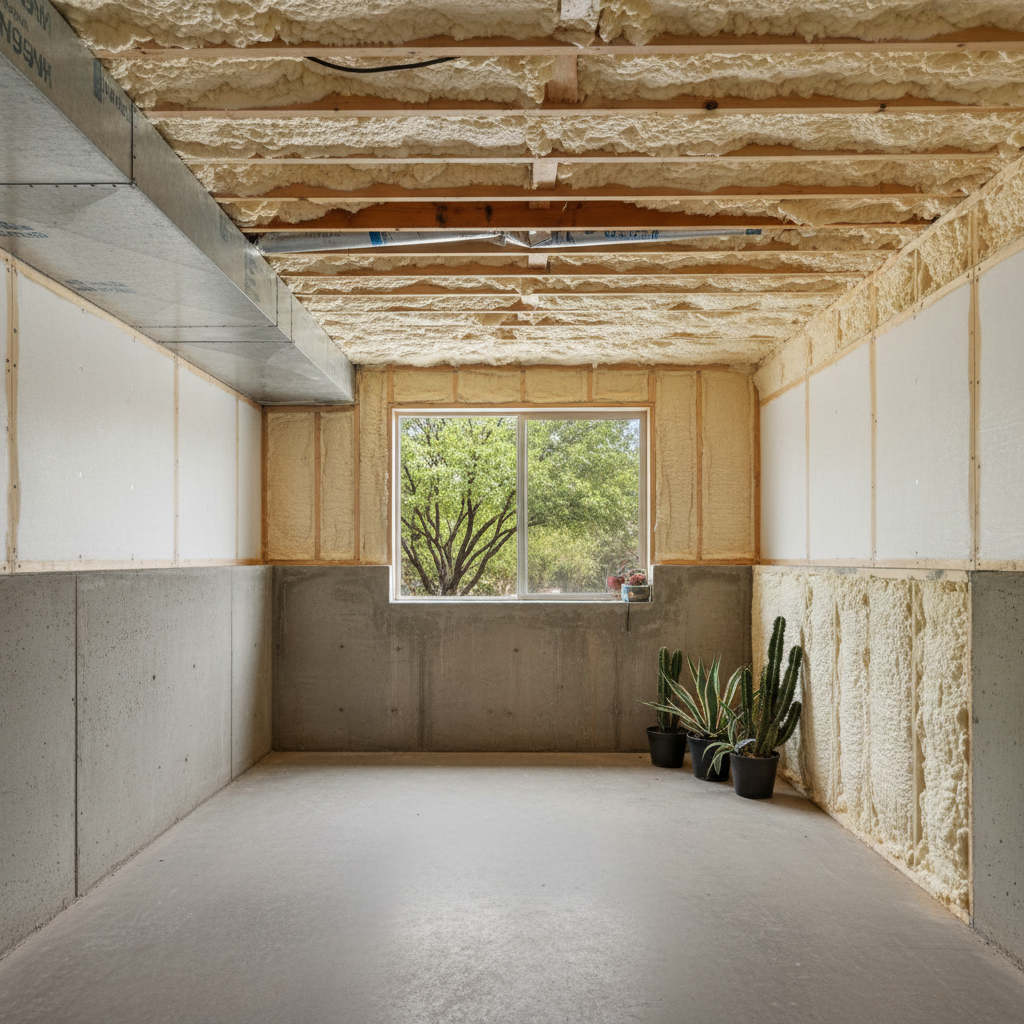
Thinking about insulating your basement, are we? Smart move, especially here in Tucson where those temperatures can swing like a pendulum. But hold on a second. Before you even start gathering quotes or thinking about a DIY project, let's chat about some of the biggest mistakes I see people make. These aren't just little oopsies; they can cost you money, create ongoing problems, and leave you with a whole lot of regret.
Ignoring Moisture – It's a Basement, Not a Desert
This is probably the absolute biggest mistake, and it's a real problem. Folks often forget that basements, even in dry places like ours, are naturally prone to moisture. You've got pressure from the soil outside pushing in, possible leaks, and just general humidity. Slapping insulation over a moisture issue? That's like putting a band-aid on a broken leg; it won't fix a thing and will probably make it much worse.
- Not fixing leaks first: If you've got cracks in your foundation or water seeping in after a monsoon, you absolutely, positively have to get that fixed before you insulate. No insulation, not even closed-cell spray foam, is going to magically stop active water from coming in.
- Skipping proper drainage: Take a look at your home's exterior. Does your landscaping slope away from the foundation? Are your gutters actually working? These details really matter.
- Forgetting about humidity: Even without obvious leaks, basements can still feel damp. A dehumidifier might be a smart buy before you seal everything up. You definitely don't want mold growing behind your brand new insulation, do you?
Picking the Wrong Type of Insulation for Tucson
Not all insulation is created equal, especially when we're talking about basements. What works great up in an attic could be a total disaster below ground. I often see people just grab the cheapest option, or whatever they're used to, without really thinking about the specific challenges a Tucson basement presents.
- Batt insulation directly against concrete: This is a huge no-no. Fiberglass or mineral wool batts will soak up moisture from the concrete, lose their R-value, and become a perfect spot for mold and mildew to grow. You'll end up with a musty smell and unhealthy air, trust me.
- Not understanding vapor barriers: In our climate, you've got to be careful with vapor barriers in basements. Sometimes you need one, sometimes you don't, and sometimes it needs to be in a very specific spot. Get this wrong, and you're just trapping moisture where you absolutely don't want it.
- Underestimating spray foam's benefits: Look, I run Tucson Spray Foam Solutions, so yeah, I'm going to talk about it. But for basements, especially here, closed-cell spray foam is often the best choice. It works as an air barrier, a vapor barrier, and insulation all at once. It doesn't absorb water, and it sticks right to the concrete, sealing out air and moisture. It's an investment, sure, but it really pays off in comfort and by helping you avoid future headaches.
Hiring the Wrong Contractor (or Trying to DIY Everything)
This one's a classic. You wouldn't let just anyone tinker with your car's engine, so why would you trust your home's foundation and comfort to someone who doesn't really know what they're doing?
- Going with the lowest bid without checking references: A cheap price often means cheap work or cut corners. Always ask for references, check their license, and make sure they truly understand the unique challenges of basement insulation.
- Not asking about their experience with basements: Insulating a basement isn't the same as insulating an attic. Ask them how many basement projects they've actually completed, especially in Tucson. Our soil, our monsoon season – it all makes a difference.
- Thinking all DIY is easy: Some insulation jobs are perfectly fine for DIY. Basement insulation, though, especially if you're dealing with moisture or trying to apply spray foam, usually isn't one of them. You could easily mess up the vapor barrier, create thermal bridges, or even hurt yourself. It's often just smarter to bring in a pro who really knows the ropes.
Don't get me wrong, insulating your basement is a really smart move. It'll make your home more comfortable, save you money on energy bills, and can even give you more usable living space. Just make sure you're doing it the right way. Address any moisture first, pick the right materials for our specific climate, and don't be afraid to call in an expert. You'll be glad you did.